

Meditations Through a Burning House
The details of a life are proven lessons in locomotion.

1.
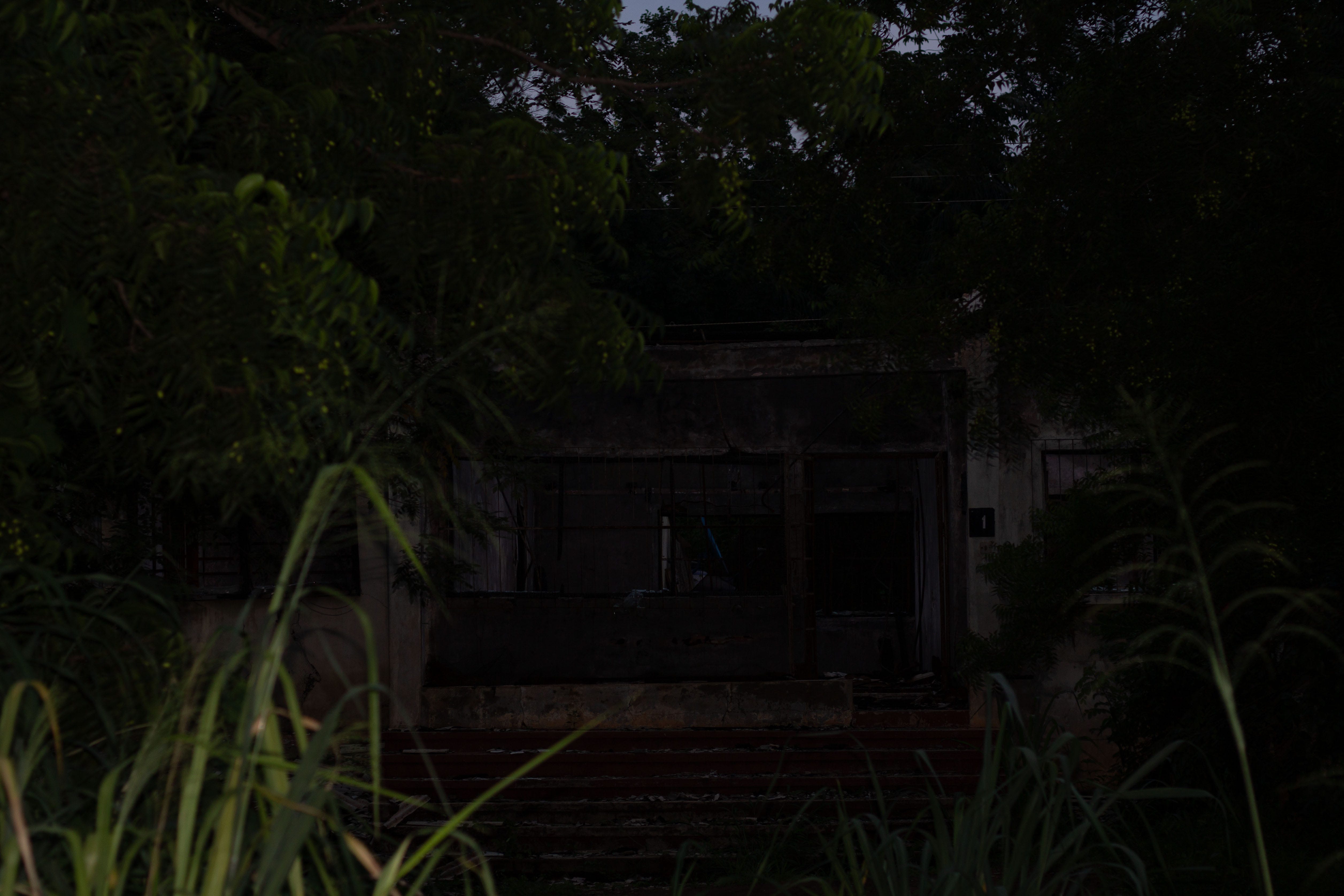
I had been there before. Or better said, I had seen it before, but on what occasion I do not remember. Had I been on one of my walks through the staff quarters when I glimpsed its blackened hulk, or was it that day I was scouting for a location to photograph someone with whom I now seldom speak? I am separated from those days by distance, temporal and physical. Time and experience do not mix, their every encounter being a lesson on the obnubilation of the latter by the former, with experience becoming a curio ensconced behind frosted glass, its finely detailed vertices steadily declining into misted abstraction. Opaqueness is further aggravated by fixation; appraised from a certain distance and with a sort of attention, the segment of a lived life takes on dream-like amorphousness and plasticity. It becomes volatile, mind-bogglingly transposable, and its important plot points shift like police thumbtacks tracking a murderer’s scurry across a map, a trail of holes shadowing his flight from city to city, hideout to hideout, traversing an oneiric landscape.
2.
The details of one’s life, plot points that they are, are proven lessons in locomotion; elements electrified by one’s scampering from place to place, love to love, swimming in this lake and then swimming in that other lake, following this diet and then sticking to that diet. To live a life is to be a fugitive; those who know this negotiate every corner, every turn, with a glance over the shoulder. Unlike is the case with some fugitives—say a murderer with a good lawyer, for example—a life is a charge no one escapes. Tragedy, whether orchestrated or instituted by chance, is no trapdoor through which one exits the stage play of one's life—it is an interlude, an intermission the purpose of which is the recalibration of one’s understanding, ultimately situating one at a different relation to things. It is as much a changing of the light as it is a conferment of new eyes, and thus a new-sprung mode of seeing. In the instance this intermission, by way of death, forces one’s removal from events, the recalibration of understanding zaps like a neutron star beyond the curtains and into the audience. Somewhere on the obituary page, inching towards the band of survivors huddled beneath the roof of a paragraph is Understanding, dazzling and reconstituted, ever slightly tilting narrative arcs of which they, the survivors, are protagonists (we are all protagonists). In this way, every story is a lesson in locomotion.
3.
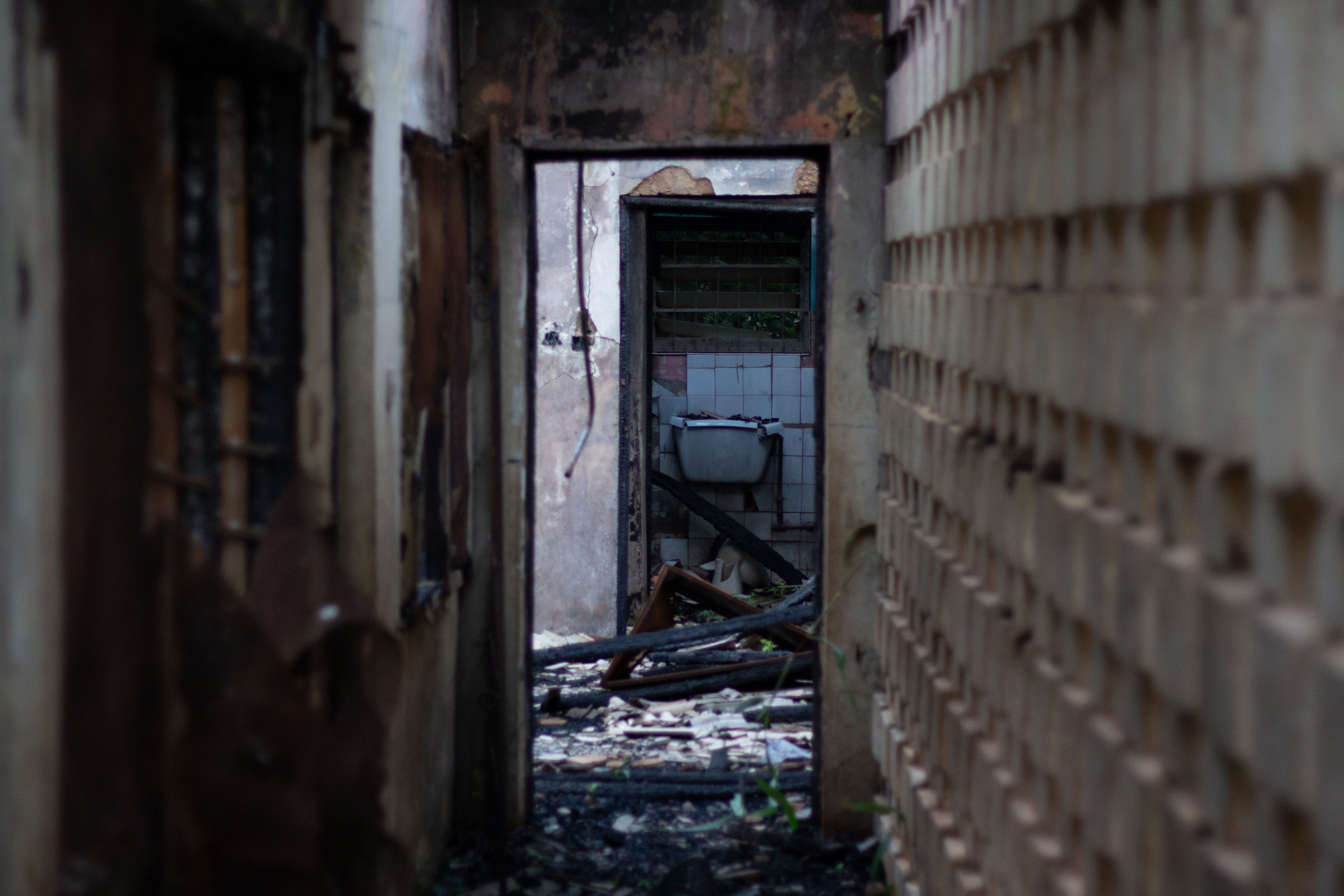
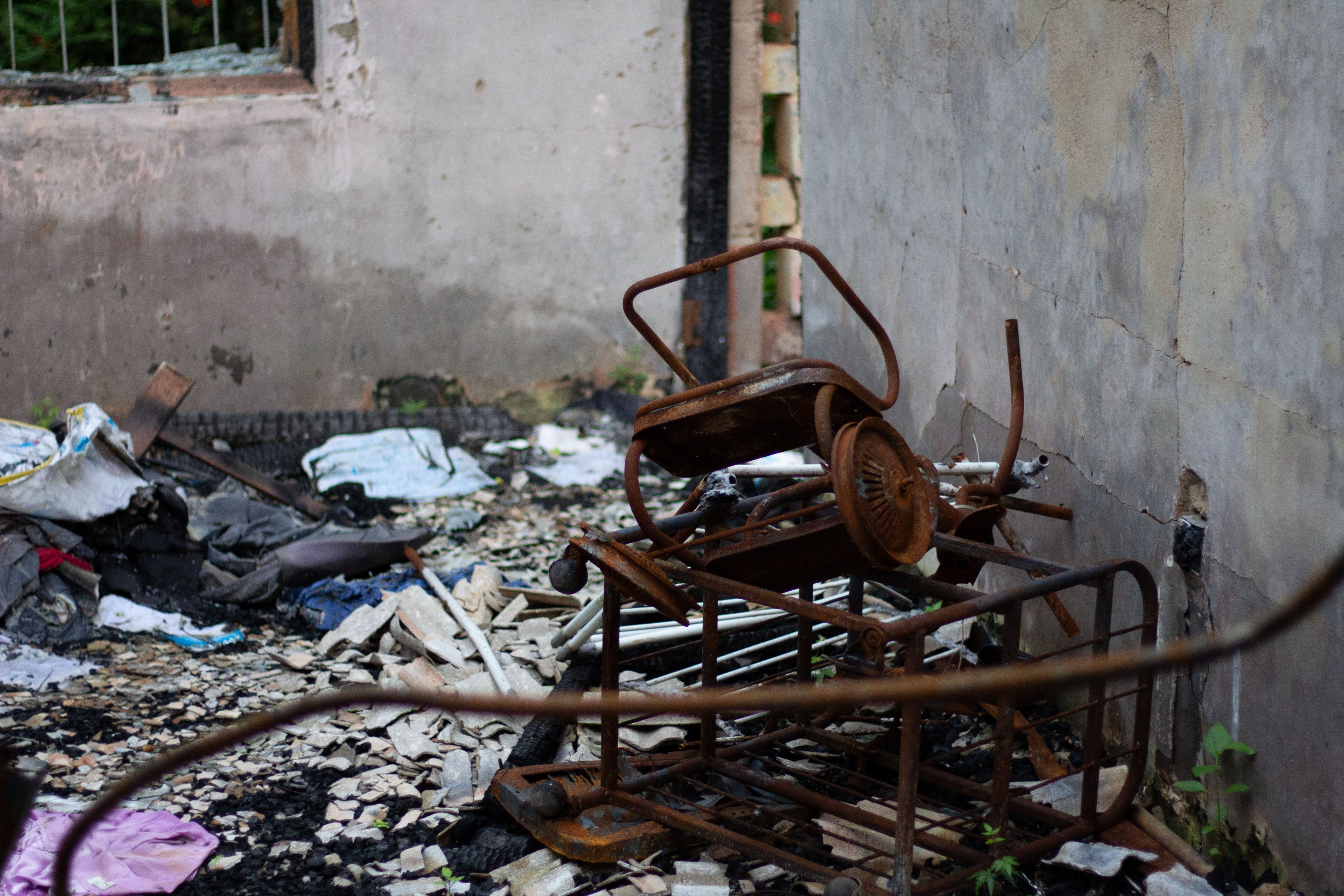
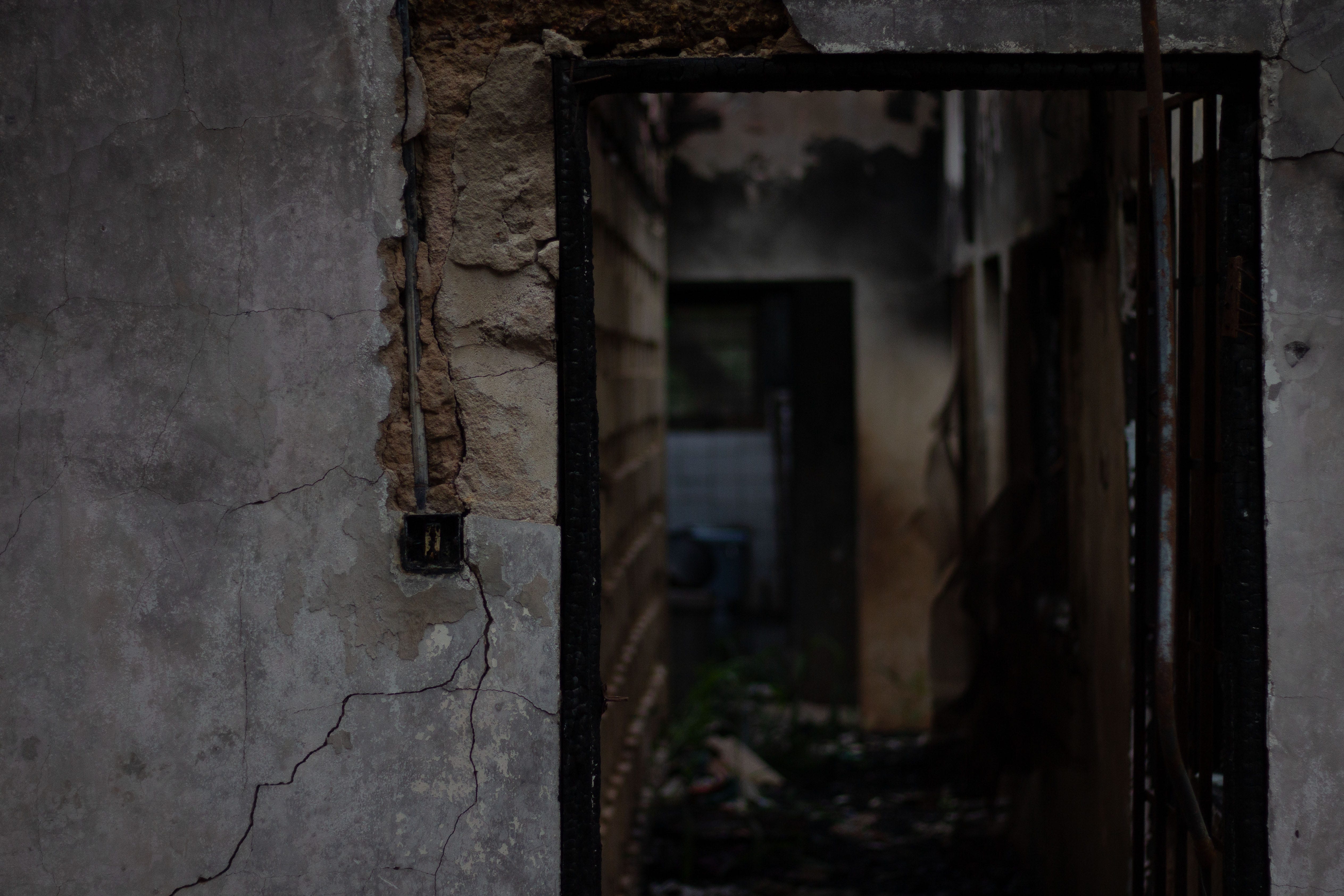
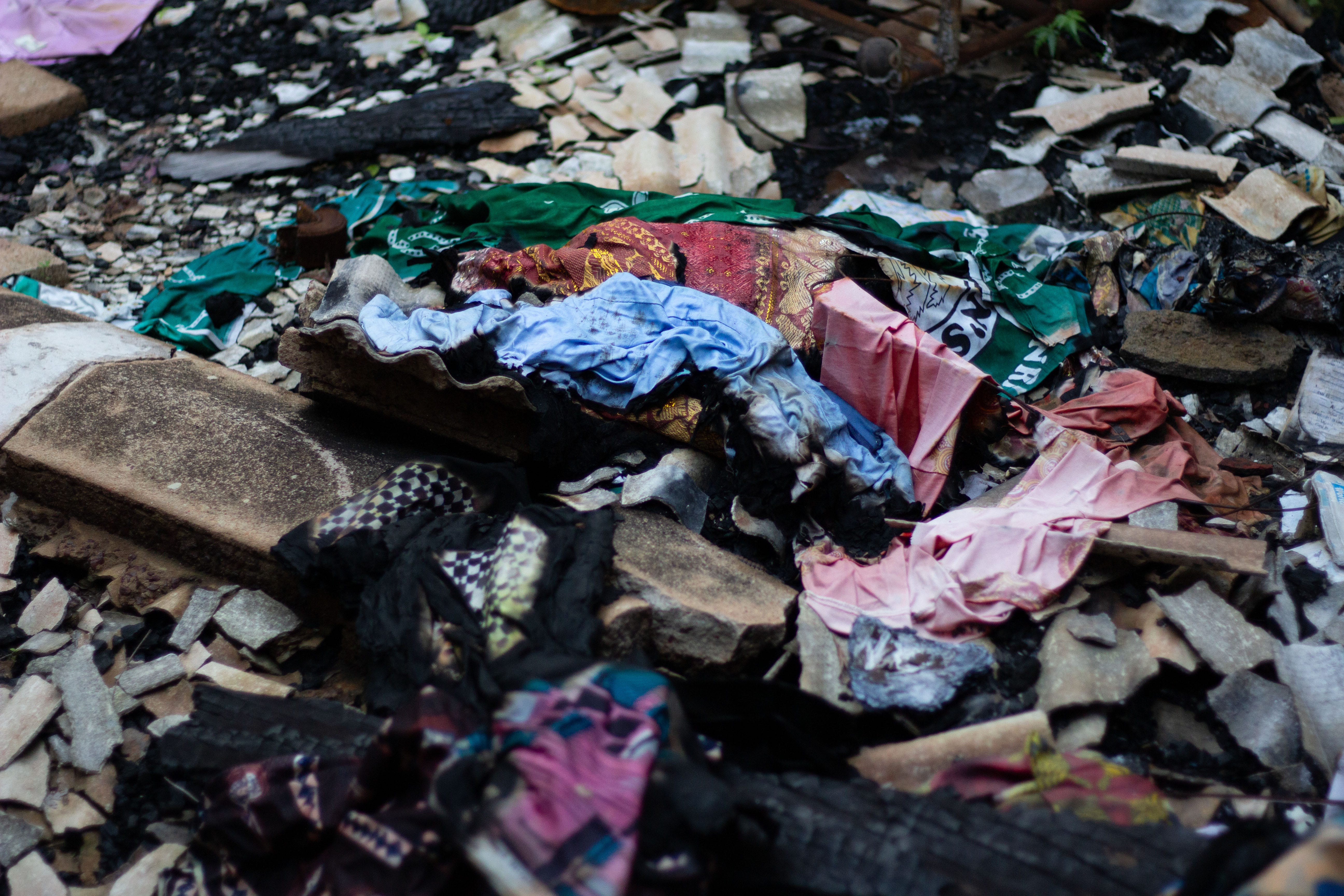
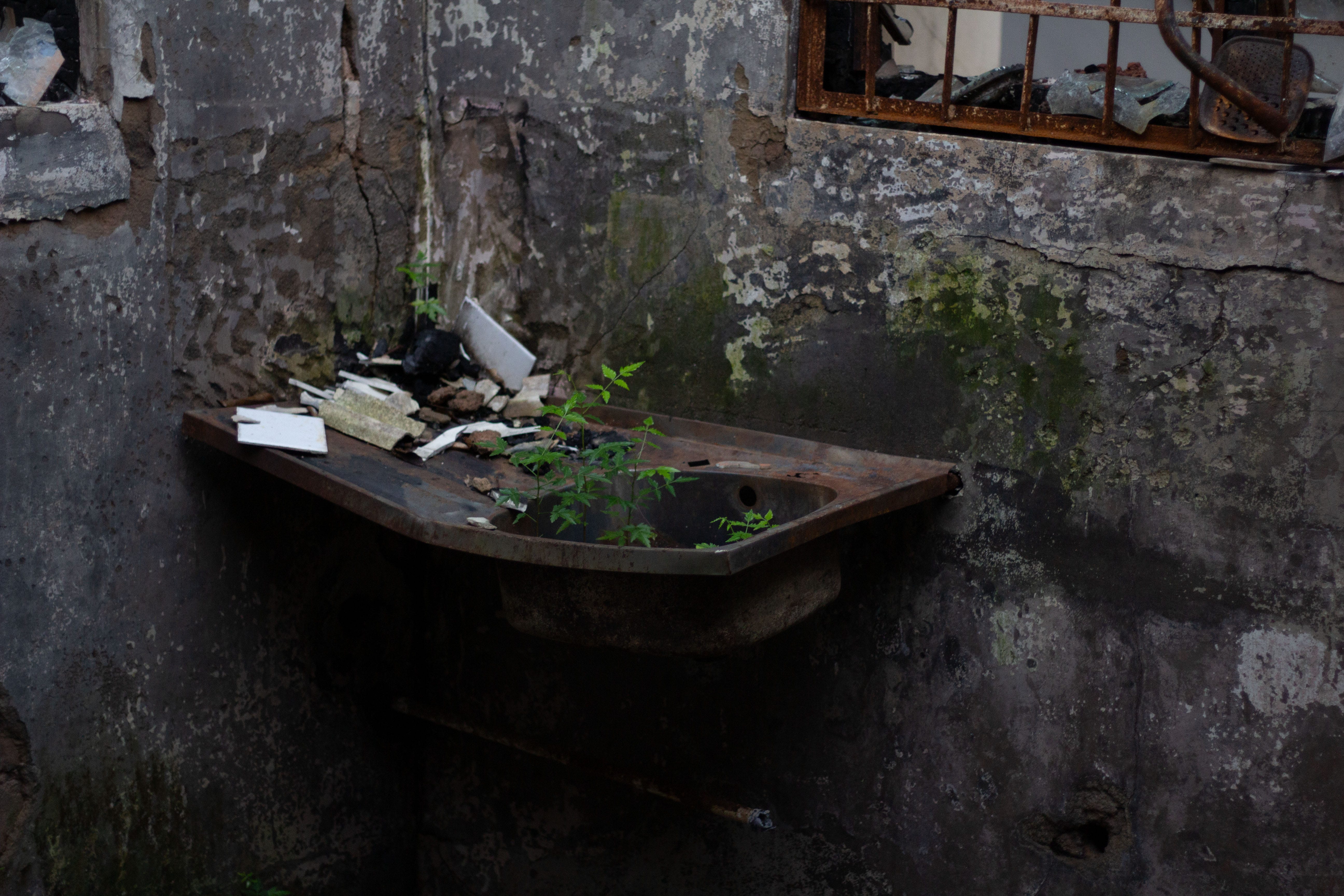
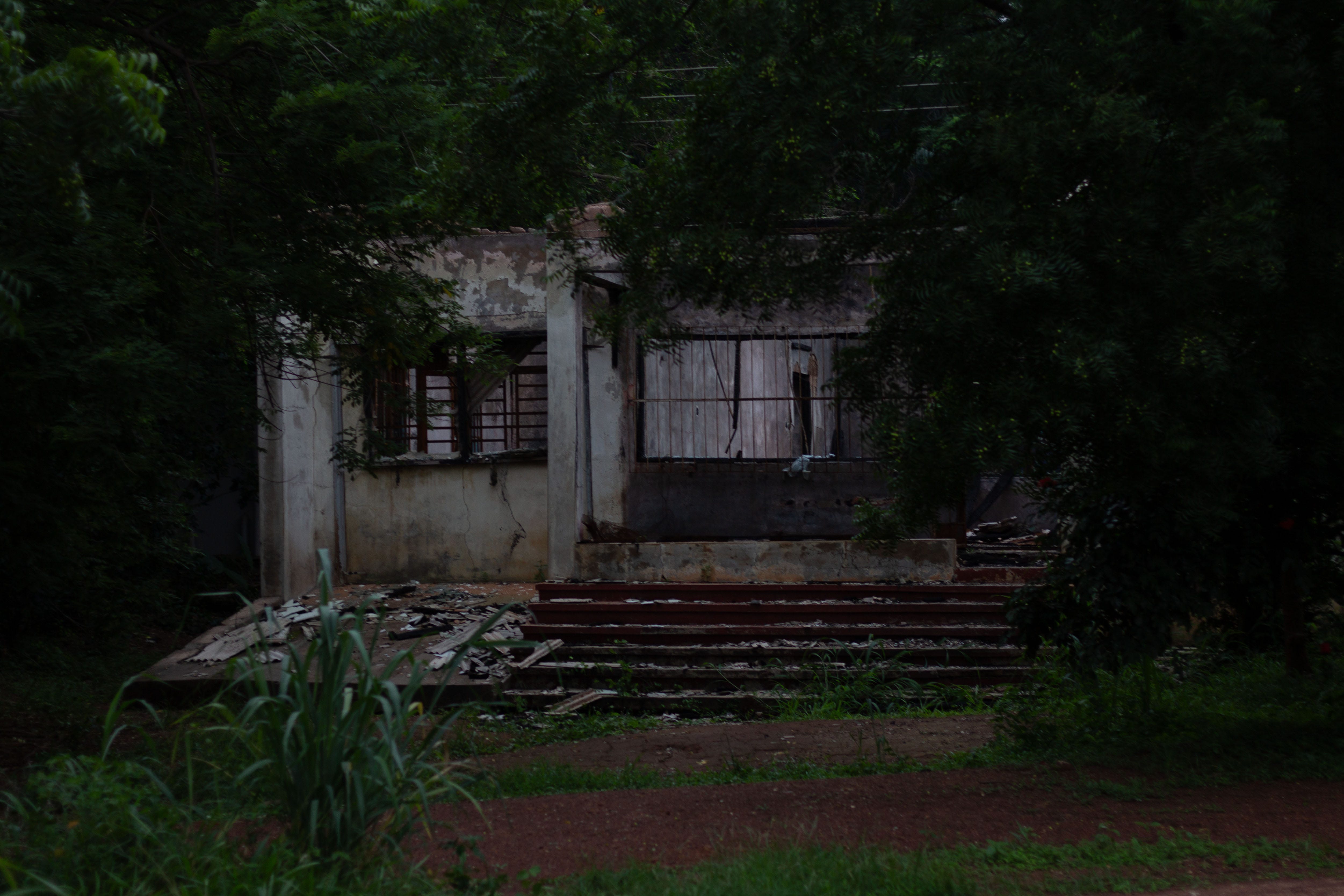
Of the house, one could safely assume the occupant was a lecturer or someone else who worked in some capacity for the university. Perhaps a professor or a senior lecturer, but certainly not a gardener or a security officer. The ruins, charred but still legible on the blackened page of destruction, bore markers of middle-class privilege—the remains of a tricycle, the scraps of what was once expensive hollandaise cloth, a carbonised bedroom trolley. Perhaps more intriguing than the cause of the tragedy was the absence of any visible attempts to remove the artefacts of its occurrence, the post-cataclysmic scene preserved for anyone who went out of their way to have a look. One could safely say there were children in that house (if the tricycle was anything to go by) and could only wonder if they got out safely, if no one was hurt. Was it an electrical malfunction? A kitchen accident? Arson? The question of cause stayed with me as I surveyed the scene, gingerly stepping over wood, metal, clothes—all marked by flames.
4.
Of the photographs I took that day, one in particular dogs my mind. My subject is outside the house, and I’m within. He is by the window, looking stoically at the camera, his hands gripping the rusted burglar-proofing. On my side of the wall, inside, is his jacket—checked red lining and black exterior—hanging from what was once a curtain holder. The window frame is a huge rectangle of charcoal.
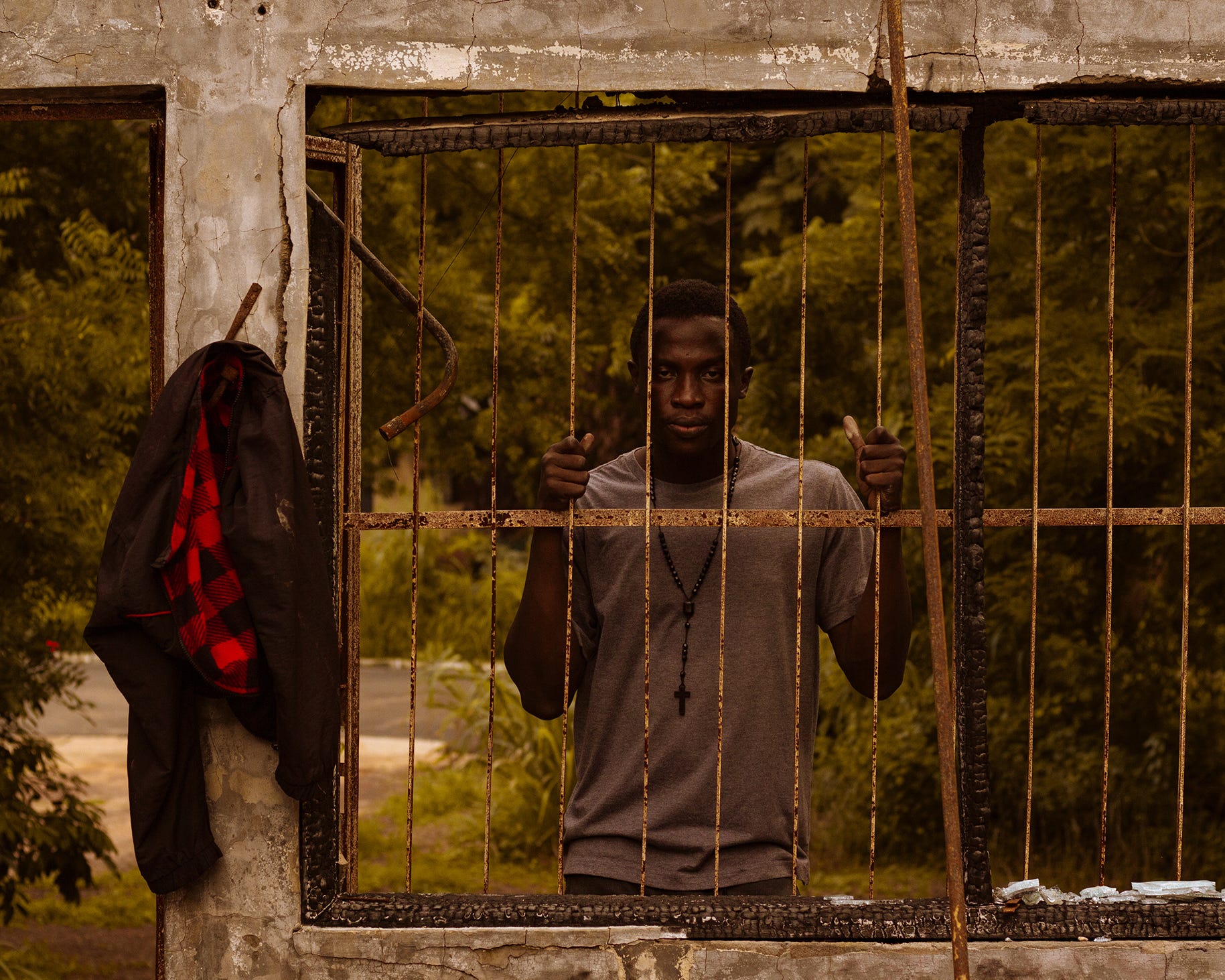
This photograph is one I’ve come to believe encapsulates my experience with that house. An outsider looking in, I am armed with nothing but artefacts, imagination, and my idiosyncrasies of interpretation. Forced into a point of view by what I know, I fill up the gaps in my understanding with assumptions and extrapolations derived from experience and existing knowledge. The unknown is filled with what resembles it most of what is known. One digs familiar ground to fill up an unfamiliar hole, egged on by the knowledge that what one stands on is earth, and what should be inside there is also earth. The whole thing could have been an art installation—the blown-out light switches, the mangled metal, the smithereens of glass—but, of course, it was not.
5.
While tragedy is a spectacle, mesmerism or pathos isn’t enough to qualify misfortune or its artefacts as art. Art is art because of intention. Perhaps if the house were part of the set in a screen adaptation of Medea, then we would be able to call it art. Jilted by the husband for whom she betrayed her father and her homeland, a scorned and enraged Medea sets fire to her home with her children within. Rather than conjure flames with sorcery, she chooses the human, laborious way of stacking the house with tinder and striking a match again and again, insistent even as the wind antagonises her efforts, persisting until her destruction finally blossoms behind a cupped palm. Cut.
6.
Action. Catastrophe is always happening, and by this, I do not mean that our world is a cesspool of disasters, perpetual and simultaneous and vicious in their occurring, though this is true. A tragedy, once underway, cannot be interrupted. What we call interruption is merely mutation. People often speak of tragedy as a thing which starts and ends, as if it were a cassette tape unspooling, determinedly racing to the final note of its music. They forget (or refuse to acknowledge) that after its occurrence, disaster is disintegrated into digestible chunks and strategically fed to one in a manner and with such frequency that its erstwhile enormity cannot be forgotten. You eat loss once, and your palate is forever tainted; everything you swallow thereafter is marked with the aftertaste of misfortune. The very impossibility of returning to a before ensures an ever-running sequence of afters. A friend told me of how, at the age of six, an adult, a man she knew well, got electrocuted before her eyes. He had asked her if she wanted him to get her anything, and she said she wanted a coconut, after which he tried to pluck one for her as she watched. He had with him a metal rod for that purpose, which, as he tried to knock the fruit down from the tree, got caught in an overhead high-tension electrical wire. As his skin melted—she told me they could not get him out of his shoes after—so did the incident sear itself into her mind. She could not eat with metal spoons for the longest time. A tragedy, once underway, cannot be interrupted; it is the interruption.
7.
In Peter Weir’s 1998 psychological drama, The Truman Show, our protagonist, Truman, is an unsuspecting insurance salesman whose speckless life in the hyper-picturesque town of Seahaven is a reality television show filmed with about five thousand cameras and broadcast to millions globally. His wife, Meryl, is a paid actor, as are his mother and his best friend, Marlon, with whom he cracks a beer now and then; Spencer, his affable elderly neighbour is also one, as is Spencer’s friendly dalmatian, Pluto; his beautiful island town of Seahaven is, in reality, a gigantic soundstage built into a colossal dome. His weather is controlled through knobs and sliders, and every product he uses is a surreptitious advert. In essence, Truman’s world is a simulation, a constructed reality within which he is guided by routines of which he is oblivious. To keep him from ever attempting to leave his water-surrounded habitat, the show’s executive producer and creator, Christof, orchestrates a boating accident in which Truman’s father “dies,” leaving him with extreme thalassophobia that follows him into adulthood. Christof understood well not only tragedy’s power of recalibration but also the fact of its perpetuity. It would only be half-true to say that once a tragedy happens, it cannot un-happen. What is wholly true is the crux of its perpetuity: if it happened, then it never ended. And if it never ended, then it cannot un-happen. Unable to forget the night of his father’s drowning, Truman’s fear of water keeps him on his island, and when he decides to leave for Fiji by air, well-timed inconveniences stop him.
8.
Standing in the cold July air, surrounded by the detritus of an inferno, each charred item pulsating with a story I would never know—as do the affected lives with memories of the disaster—I realised then that the fire was what ended; the burning, however, did not. ♦
This photo essay was first published in Culture Africa curated by Frank Njugi, and was translated into German and French by Hans Hofe and Lorna Likiza, respectively.
this is so beautifully written. you write so beautifully. and the pacing? this piece brought me in and held me gently while I took in and processed what it was here to tell me.
I love it ❤️
You can always tell when a power essays. The words dance.